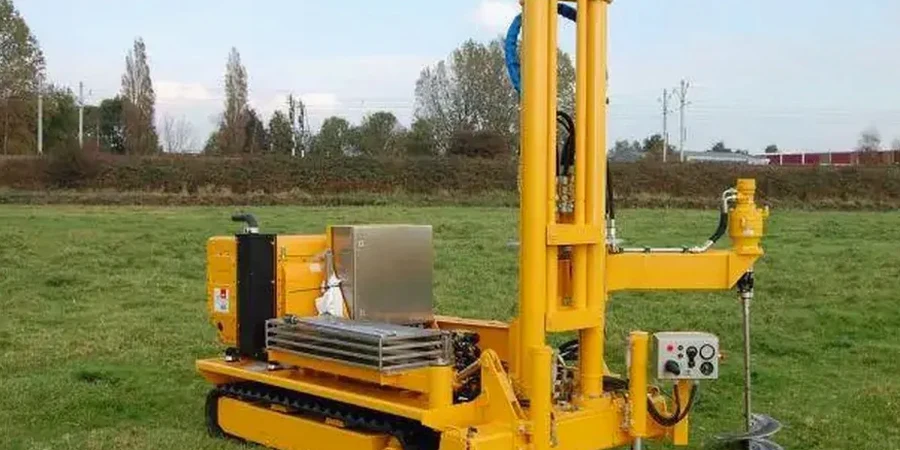
ASTM D5778 governs the electronic cone penetration test, and in Columbus Ohio with its complex glacial stratigraphy, the standard becomes more than a procedure — it is the only reliable path to understanding the transition from stiff tills into interbedded lacustrine silts. The CPT logs continuous tip resistance, sleeve friction, and pore pressure, generating a high-resolution profile that static borings simply cannot match. For projects along the Scioto River where soft alluvium overlies Wisconsinan lodgement till, the pore pressure dissipation test identifies drainage boundaries that control consolidation settlement. We operate a 20-tonne truck-mounted rig with a 15 cm² piezo-cone that penetrates up to 80 feet in most Columbus Ohio formations, and we calibrate every cone against ASTM D5778-20 before each mobilization. Engineers who need shear wave velocity can pair the CPT program with seismic cone testing for Vs30 classification, while those investigating liquefaction in the Scioto floodplain combine tip resistance with cyclic stress ratio analysis guided by NCEER methodology.
A single CPT sounding in Columbus glacial till can replace four SPT borings when the stratigraphy is correctly interpreted with pore pressure normalization.