GEOTECHNICAL ENGINEERING
COLUMBUS OHIO
HomeGround improvementStone column design

Stone Column Design in Columbus Ohio: Ground Improvement for Weak Soils

Sound ground. Sound decisions.

LEARN MORE

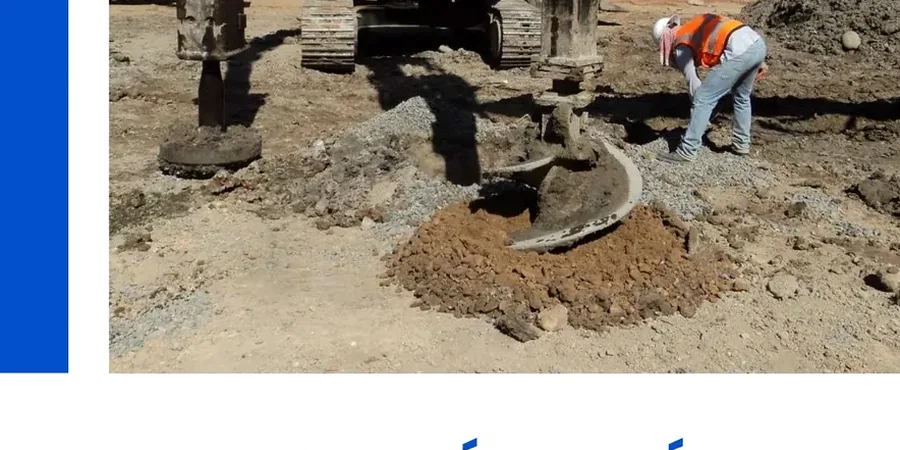
The rig runs a deep vibrator, 130 horsepower, hanging from a crane. It punches through fill and soft clay. In Columbus, we use vibro-replacement stone columns because the native ground won't hold a building on its own. The glacial lake plain left compressible clays across Franklin County. These soils consolidate under load. They settle. Stone columns change that equation by creating stiff, draining inclusions in the weak matrix. Before mobilization, the design phase determines column diameter, spacing, and depth based on the load and the soil profile. We often pair this with CPT testing to get continuous stratigraphy without disturbing the sample, especially where the soft zone depth varies across the site.

A 20 percent area replacement with stone columns can cut total settlement by half versus untreated ground, and the gain in bearing capacity often exceeds 100 percent.
Our service areas

Methodology and scope

The Olentangy Shale bedrock sits 15 to 40 feet down across much of Columbus. Above it, you find glacial till, then lakebed silts and clays. These lakebed deposits have undrained shear strengths below 500 psf in some pockets, and that's the problem. Standard footings would need to be enormous, or they'd settle beyond tolerance. Stone columns transfer the load past the weak layer into the till or bedrock. The design assigns an area replacement ratio, typically 10 to 35 percent, depending on the target bearing capacity. We specify clean, angular crushed stone, ASTM 57 or similar, because rounded gravel won't interlock under lateral pressure. Each column forms a composite ground mass with higher stiffness and a drainage path. That drainage accelerates consolidation. Settlements that would take years happen in weeks.
Stone Column Design in Columbus Ohio: Ground Improvement for Weak Soils
Technical reference — Columbus Ohio

Site-specific factors

Columbus sits at 902 feet elevation, and the Scioto River floodplain cuts through the city. About 300,000 people live on soils that can liquefy or settle dramatically. The last significant seismic event was the Anna earthquake of 1937, magnitude 5.4, but the real risk here is static settlement, not shaking. A warehouse floor differential settlement of two inches destroys forklift operations. A bridge approach slab that sinks creates a maintenance liability. Stone column design mitigates both total and differential settlement. The design isn't guesswork. We use Priebe's method and finite element models to predict the composite behavior. The soil report must include grain size distribution, plasticity index, and undrained shear strength from field vane or triaxial testing. Without that data, the column grid is just a hope, not a solution.

Need a geotechnical assessment?

Reply within 24h.

Email: contact@geotechnicalengineering.biz

Applicable standards

ASTM D1586 Standard Test Method for Standard Penetration Test (SPT), ASTM D2487 Standard Practice for Classification of Soils for Engineering Purposes, FHWA-NHI-06-089 Ground Improvement Methods, Volume II

Reference parameters

ParameterTypical value
Typical column diameter24 to 42 inches
Area replacement ratio10% to 35%
Target bearing capacity4 to 8 ksf (post-treatment)
Effective depth range10 to 50 feet
Aggregate specificationASTM 57 clean angular stone
Settlement reduction factorn = 2 to 4 (typical)
Installation methodWet or dry bottom-feed vibro-replacement

Common questions

What does stone column design cost for a typical Columbus project?
How deep can stone columns go in Columbus soils?

We typically design columns to 30 to 50 feet depth. The limiting factor is the top of competent glacial till or bedrock. Vibro-replacement rigs can reach 60 feet if needed, but most Columbus sites find bearing between 20 and 40 feet.

Does stone column design account for liquefaction?

Standard stone column design for settlement doesn't automatically cover liquefaction. If the site is in a seismic hazard zone, we add a drainage and densification check per NCEER guidelines. The column grid may need to be tighter to achieve the required factor of safety against liquefaction.

What information do you need to start the design?

We need a geotechnical report with SPT N-values or CPT tip resistance, Atterberg limits, grain size curves, and undrained shear strength data. The structural loads and allowable settlement criteria are also required.

Location and service area

We serve projects across Columbus Ohio and surrounding areas.

View larger map