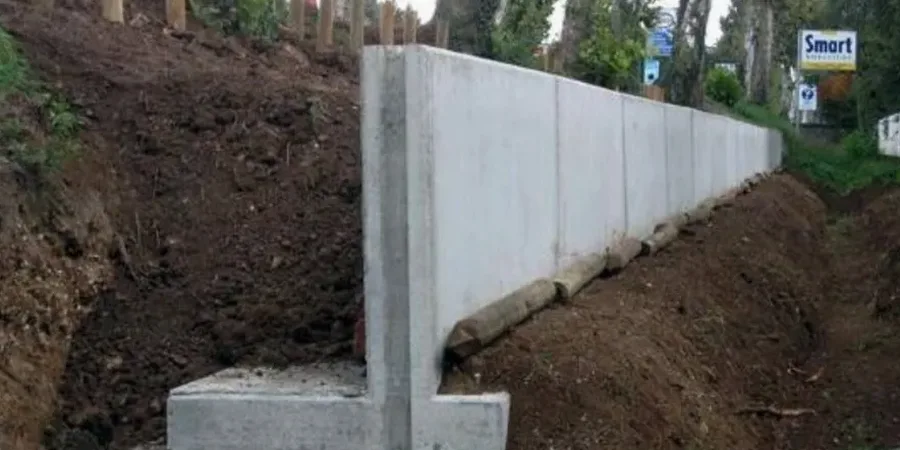
In Columbus, Ohio, the stability of slopes and the integrity of retaining walls are critical components of geotechnical engineering, directly influencing the safety and longevity of infrastructure and private development. The 'Slopes & Walls' category encompasses the specialized analysis, design, and remediation of natural and engineered earth structures that must resist lateral soil pressures, prevent erosion, and maintain grade separations. This field is essential in a city shaped by river valleys like the Scioto and Olentangy, where topography and soil conditions create inherent challenges for construction. From stabilizing highway embankments along I-270 to enabling basement excavations in urban neighborhoods like German Village, these services ensure that vertical or near-vertical grade changes do not compromise structural integrity or public safety.
Understanding the local geology is fundamental to effective slope and wall design in Central Ohio. The region is underlain by glacial deposits from the Wisconsinan glaciation, resulting in a complex stratigraphy of low to medium plasticity glacial tills, outwash sands and gravels, and lacustrine silts and clays. These soils, particularly the water-bearing granular layers, can exert significant hydrostatic pressure behind retaining structures and dramatically reduce the shear strength of slopes when saturated. Bedrock, primarily Ohio Shale and limestone, is encountered at varying depths and can introduce wedge failure risks along bedding planes in cut slopes. A thorough slope stability analysis must account for these local materials, their drained and undrained behavior, and the seasonal high groundwater table that is typical across Franklin County.
All design and construction within this category must adhere to stringent national and local regulations. The primary standard is the Ohio Building Code (OBC), which adopts and amends the International Building Code (IBC) with specific geotechnical provisions for earth retaining structures. The design of permanent retaining walls over four feet in height, or any wall supporting a surcharge, requires a professional engineer's seal and must meet the safety factors for overturning, sliding, and bearing capacity defined in ASCE 7 and IBC Chapter 18. Additionally, projects within the City of Columbus right-of-way or those impacting floodplains, as mapped by FEMA and managed by the Ohio Department of Natural Resources, trigger specific permitting and scour protection requirements. For complex sites, the design of active/passive anchor design for tieback walls must comply with the Post-Tensioning Institute's recommendations, which are referenced as an industry standard.
The need for these specialized services arises across a broad spectrum of projects throughout Columbus. Commercial developments in areas with significant grade changes, such as those near the Scioto Mile or along Henderson Road, frequently require engineered retaining wall design to maximize usable land area. Public infrastructure projects, including bridge abutments for the Ohio Department of Transportation (ODOT) and sound barrier walls, demand rigorous global stability analyses and often incorporate mechanically stabilized earth (MSE) or soil nail wall systems. Residential projects on sloping lots in communities like Upper Arlington or Worthington Hills commonly call for segmental block or poured concrete retaining walls to create level backyards and prevent downslope creep, with designs verified through site-specific stability checks for long-term performance.
The predominant causes are tied to the local glacial geology: poor drainage and elevated hydrostatic pressure from saturated granular soils, erosion from intense rainfall events, and the low shear strength of saturated clay tills. Inadequate compaction during original construction and the lack of proper subdrainage behind walls are also frequent contributors to distress and failure over time.
A geotechnical investigation is required by the Ohio Building Code for any permanent retaining wall over four feet in height or any wall supporting a surcharge load. For slopes, an investigation is mandatory when a critical slope is proposed adjacent to a structure or public right-of-way, to analyze both global stability and permissible soil bearing pressures.
Permanent retaining walls are typically designed for a service life of 50 to 75 years, in accordance with IBC and ODOT standards. Achieving this requires durable materials like reinforced concrete, proper corrosion protection for any steel reinforcement or anchors, and, critically, the inclusion of a functioning drainage system to mitigate freeze-thaw cycles and hydrostatic pressure.
The risk is evaluated through a comprehensive slope stability analysis that models the subsurface stratigraphy, soil shear strength parameters, and groundwater conditions. This analysis calculates a factor of safety against failure for various conditions, including static and seismic loads, and must meet the minimum acceptable safety factors defined by the IBC and local jurisdiction standards.
We serve projects across Columbus Ohio and surrounding areas.