GEOTECHNICAL ENGINEERING
COLUMBUS OHIO
HomeUnderground ExcavationsGeotechnical design of deep excavations

Deep Excavation Geotechnical Design in Columbus Ohio

Sound ground. Sound decisions.

LEARN MORE

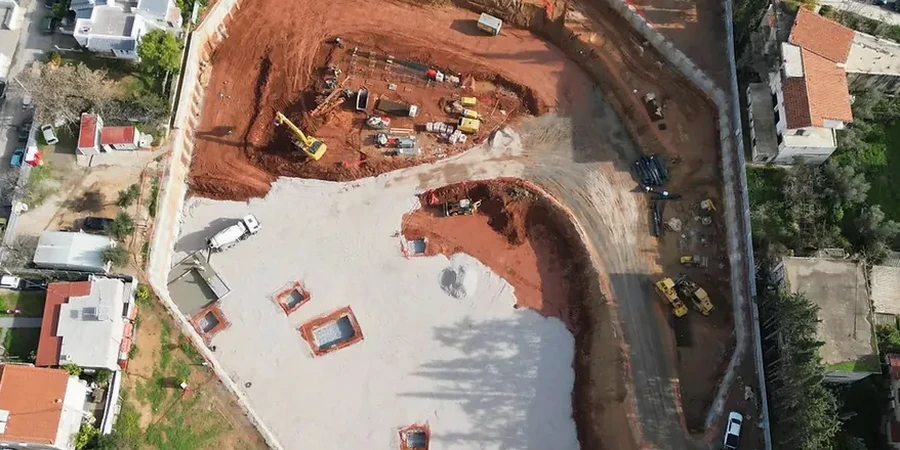
Columbus sits on complex glacial deposits that make every excavation a puzzle. We see it all the time. Contractors hit unexpected lenses of sand and gravel just below the till. Water flows in. The cut starts to ravel. A properly sequenced geotechnical design prevents this chaos. It starts with characterizing the stratigraphy. Then we model the soil-structure interaction for the shoring system. For tight urban sites near High Street or the Scioto River, we integrate dewatering into the retaining wall design early. The goal is a constructible sequence that keeps neighboring foundations stable. No surprises.

The biggest risk in Columbus deep excavations is not the till. It is the perched groundwater nobody anticipated in the sand lenses.
Our service areas

Methodology and scope

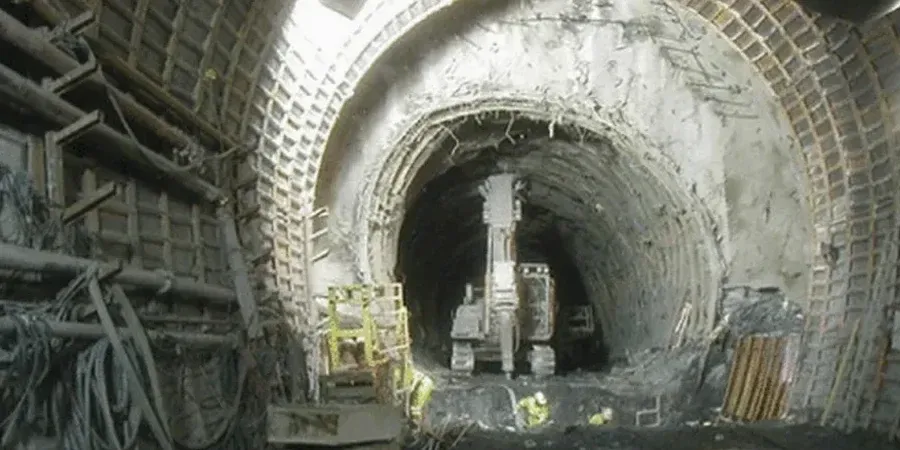
Columbus sits at roughly 900 feet above sea level. The subsurface reflects its glacial past. We typically encounter stiff to hard Wisconsinan till overlying Devonian shale. The till contains cobbles and boulders. This drives our design parameters. Earth pressure diagrams must account for the cohesion intercept. We rarely use purely frictional models here. Temporary shoring in till can often stand on a near-vertical cut for short periods. But add water from a perched layer and the behavior flips completely. Our designs lean heavily on drained strength parameters from consolidated-undrained triaxial tests. We also run swelling tests on the shale. It heaves when unloaded. Ignoring that detail cracks slabs and buckles struts.
Deep Excavation Geotechnical Design in Columbus Ohio
Technical reference — Columbus Ohio

Site-specific factors

We have seen one mistake more than any other. Designers treat the glacial till as a homogeneous, dry material. It is not. A project near Ohio State University almost collapsed because a thin silt seam directed groundwater into a 25-foot cut. The contractor had no well points in place. The bottom heaved. The adjacent sidewalk cracked. Remediation took three weeks and cost more than the original shoring. A proper exploration program with piezometers would have caught that lens. Our designs mandate at least one boring extending 2.5 times the excavation depth below the base. We check for artesian conditions in the underlying carbonate rock too. That pressure can blow out the bottom of an excavation without warning.

Need a geotechnical assessment?

Reply within 24h.

Email: contact@geotechnicalengineering.biz

Applicable standards

ASTM D1586 - Standard Penetration Test, ASTM D2487 - Classification of Soils (USCS), ASTM D4767 - Consolidated-Undrained Triaxial Test, IBC Chapter 18 - Soils and Foundations, ASCE 7 - Minimum Design Loads, FHWA Geotechnical Engineering Circular No. 4 - Ground Anchors

Reference parameters

ParameterTypical value
Typical Till Cohesion (c')200-800 psf
Typical Till Friction Angle (φ')28-34 degrees
Shale Swell PotentialLow to Moderate
Design Groundwater Elevation (Downtown)750-760 ft MSL
Common Shoring SystemSoldier pile & lagging / Soil nail
Seismic Site Class (IBC)C or D
Minimum Base Stability Factor1.5 (permanent), 1.2 (temporary)

Common questions

How deep can you excavate in Columbus glacial till without support?

In our experience, a vertical cut in dry, stiff till can stand up to 8 to 10 feet for a short period. We never rely on that for more than 24 hours. Any cut deeper than 5 feet requires a competent person evaluation per OSHA. If we see sand seams, moisture, or vibration from traffic, we recommend immediate shoring regardless of depth.

What is the typical cost range for a deep excavation design in Columbus?
Do you design permanent retaining structures tied to the excavation?

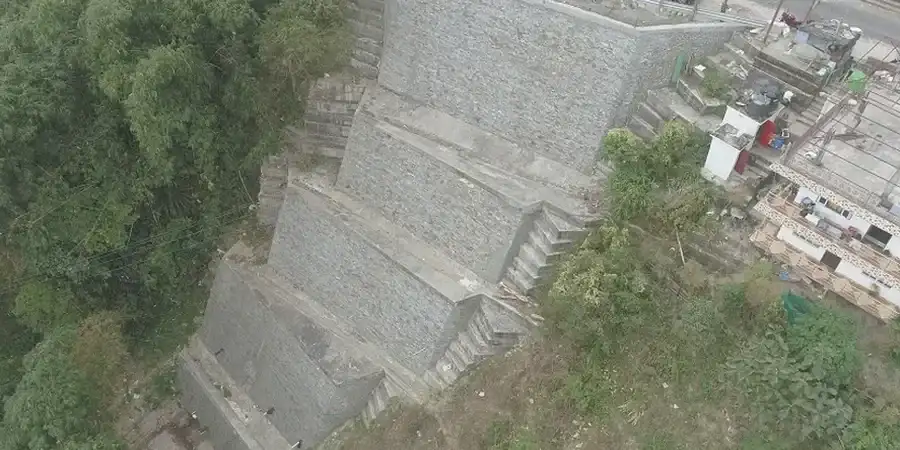
Yes. We often design the temporary shoring to act as the permanent basement wall. This requires careful concrete mix design for soldier pile lagging or shotcrete facing. We specify drainage composites to prevent hydrostatic pressure buildup against the permanent wall.

How do you handle vibrations from blasting in shale during excavation?

We set vibration limits based on the condition of the nearest structure. We follow OSMRE and local Columbus building code limits. Pre-blast surveys document existing cracks. During blasting, seismographs record peak particle velocity. We adjust charge weights instantly if readings approach the threshold.

Location and service area

We serve projects across Columbus Ohio and surrounding areas.

View larger map